
No items in the cart



How to Spot Dyed Gemstones: 9 Signs to Watch For
Dyed gemstones may look vibrant at first but the color fades fast, leaving you with cheap, colorless stones. Here are 9 practical ways to tell if a gemstone is dyed, from checking the drill hole to spotting pricing red flags.
By Valerya | 8 min read
KEY TAKEAWAYS
- Dyed gemstones may look vibrant at first, but the color fades fast, leaving you with cheap, colorless stones
- Check the drill hole, look for color spots, and inspect the thread for dye residue
- Super vibrant opaque stones (fuchsia pink, kiwi green) are almost always dyed
- If a stone is super clear AND cheap, something isn’t right. Natural clarity comes at a price
- Buy from sellers who can tell you exactly where their stones come from
Why Dyed Stones Are a Problem
I get questions about dyed stones all the time, so I want to talk about why this matters so much to me.
Dyed gemstones may seem attractive at first because the artificial colors look more vibrant than natural stones. But here’s the truth: that color will fade. It always does. Sunlight, chemicals, even just wearing your jewelry regularly will strip the dye away over time. You’ll be left with cheap, colorless stones that look nothing like the jewelry you originally bought.
And it’s not just about looks. The dyeing process actually weakens the stone’s structure, making it more likely to crack, chip, or break compared to natural gemstones. So you’re paying for something that won’t last and won’t hold its beauty.
My Promise: Only Natural Gemstones
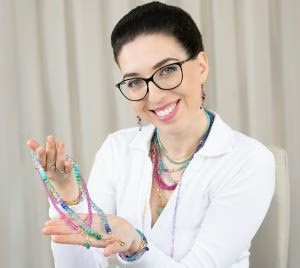
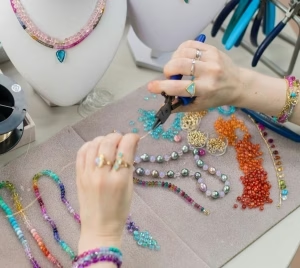
At Valltasy, I use only the highest quality, natural undyed gemstones. Every single stone in my jewelry is hand-picked from trusted suppliers I’ve worked with for years. I check each stone personally before it goes into a design.
I wrote a whole post about my approach to this: Natural Gemstones vs. Dyed: My Design Philosophy. If you want the full story behind why I refuse to use dyed stones, that’s the place to read it.
Natural gemstones have a depth and brilliance that dyed stones simply cannot replicate. When light passes through a natural stone, it reflects in a way that makes the color come alive. Dyed stones look flat and synthetic in comparison.
My promise to you is simple: every stone in every Valltasy piece is real, natural, and will keep its color forever ❤️
9 Ways to Spot Dyed Gemstones
Here are the signs I look for when examining gemstones. These are practical rules you can use right away, whether you’re shopping online or in person.
Visual Signs
- Check the drill hole. If the stone is less colorful near the hole, it’s dyed. The dye concentrates on the surface but doesn’t penetrate evenly, so the hole area reveals the stone’s real color.
- Look for color spots. If you see white or colorful spots scattered over the stone, that’s a sign of uneven dye absorption. Natural stones have consistent color patterns.
- Inspect the thread. If the string or wire passing through the stone is stained with color, the stone is leaking dye. Natural gemstones never color the thread.
Color Red Flags
- Opaque + very vibrant = dyed. If a stone is opaque and has an extremely vibrant color, there’s about a 90% chance it’s dyed. Opaque stones are the easiest to dye because the dye doesn’t need to penetrate deeply.
- Watch for white or yellow base stones. Opaque stones are often dyed from a cheap white or yellow base to any color you can imagine. The results look flashy but won’t last.
- Unnatural vibrant colors. Super vibrant stones are mostly not natural. If you see fuchsia pink opaque stones, kiwi green, opaque lavender, or similarly intense opaque colors, they’re almost certainly dyed.
Quality and Price Checks
- Trust your seller. Buy jewelry only from sellers you trust. I source my gemstones from hand-picked suppliers I’ve built relationships with over many years. A reputable seller will always be transparent about their stones.
- Check clarity vs. price. If a stone is super clear and cheap, it’s not natural. Natural stones have inclusions, or they’re very expensive. The cleaner the stone, the higher the price. There is no shortcut around this.
- Watch for impossible pricing. You cannot get large, super clear Sapphires, Rubies, or Spinels for cheap. If an expensive stone is sold at a suspiciously low price, it was dyed. An “Opal” might actually be a cheap white Opal colored to look like a vibrant rainbow stone.
PRO TIP
A good rule of thumb: if the color looks too perfect and too uniform across an opaque stone, nature probably didn’t make it that way. Natural gemstones always have subtle variations and depth in their color.
Common Dyed Stones to Watch Out For
Some gemstones get dyed more often than others. Here are the ones I see most frequently:
Sapphires are one of the most commonly dyed stones. Sellers take low-quality, pale Sapphires and dye them to look like expensive deep blue or pink Sapphires. Real high-quality Sapphires are rare and priced accordingly. According to GIA, Sapphire treatments should always be disclosed to buyers.
Opals are another common target. Cheap white Opals get dyed to create vibrant rainbow colors that mimic expensive Black Opals. The giveaway is usually the price: if a “Fire Opal” or “Black Opal” is surprisingly affordable, it’s almost certainly dyed.
Rubies at the lower price points are frequently dyed or filled with lead glass to improve their appearance. A natural Ruby with good color and clarity is one of the most expensive gemstones in the world. If you’re seeing rubies at very low prices, question what you’re actually getting.
Jade and Turquoise are also commonly dyed. Natural Turquoise in deep blue-green is rare, so much of what you see on the market has been color-enhanced.
What to Look for When Buying Online
Buying gemstone jewelry online requires extra caution because you can’t physically inspect the stones. Here’s what I recommend:
- Ask about stone origin. A trustworthy seller will know where their stones come from and won’t hesitate to tell you.
- Read the description carefully. Look for words like “treated,” “enhanced,” “color-enhanced,” or “stabilized.” These are often codes for dyed.
- Check the return policy. Sellers who use natural stones will offer returns because they stand behind their products.
- Compare pricing. If the price seems too good for the stone type and quality shown, trust your instincts.
- Look at multiple photos. Natural gemstones show color variation in different lighting. If every photo shows the exact same uniform color, that’s a red flag.
“Every stone in my jewelry is real, natural, and chosen by me personally. I won’t compromise on this, because you deserve jewelry that keeps its beauty forever.”
NOT SURE ABOUT A STONE?
If you have questions about any gemstone or want to know more about the stones used in a specific Valltasy piece, feel free to reach out. I’m always happy to share details about the gemstones I use.
WHAT CUSTOMERS SAY
“Bright and glowing colors! The gems are like candies! I have never seen such gorgeous gems before – truly beautiful necklace, very well crafted!”
– Ann B., on the The Glow Necklace

COMMON QUESTIONS
Dyed Gemstones FAQ
Are all vibrant gemstones dyed?
No, not at all. Many natural gemstones are naturally vibrant, like Paraiba Tourmaline, Emerald, and Ruby. The difference is that natural vibrancy comes with depth and subtle variations in color, while dyed stones tend to look flat and uniformly saturated. Also, naturally vibrant stones are typically transparent or translucent, not opaque.
Can dyed stones be harmful?
The dyes themselves are generally not harmful to wear. However, some dyeing processes use chemicals that can irritate sensitive skin over time. The bigger concern is that dyed stones lose their color and degrade faster, so you’re not getting the value you paid for.
How do I know if my existing jewelry has dyed stones?
Look at the stones near any drill holes or edges. If the color is weaker or different there, the stone was likely dyed. You can also gently rub the stone with a damp cloth. If any color transfers, that’s a clear sign of dye.
What's the difference between treated and dyed?
“Treated” is a broad term that covers many processes, including heat treatment, which is widely accepted in the industry and permanent. Dyeing involves adding artificial color that fades over time. When a stone is described as “treated,” always ask specifically what type of treatment was used.
Are Valltasy stones certified natural?
Yes. I source all my gemstones from trusted suppliers and personally verify each stone is natural and undyed. I’m completely transparent about every stone I use. You can learn more in my post about Natural Gemstones vs. Dyed.
SHOP WITH CONFIDENCE
Every Valltasy Stone is Natural
Browse jewelry made with hand-picked, undyed gemstones that will keep their beauty forever.
Shop Best SellersFIND YOUR NEXT FAVORITE
Best Sellers
Every piece here is made with natural, undyed gemstones chosen by me personally ❤️

Sold out



KEEP READING
More Helpful Guides
Gemstone Hardness and Durability: Which Stones Are Safe for Everyday Jewelry?
Not all gemstones are equally tough. After years of designing jewelry, here's how I decide [...]
22
Apr
Apr
Gemstone Jewelry for Your Wedding: Colorful Alternatives to Diamonds
More brides are choosing colored gemstones over Diamonds, and the results are stunning. From Moonstone [...]
16
Apr
Apr


