
No items in the cart





What “Cedar Oil” on Your Emerald Certificate Actually Means
What does "minor oil" or "cedar resin" mean on your Emerald certificate? Almost every Emerald is treated, and that's been standard practice since Cleopatra. Here's the treatment scale, what each level means, and which treatments I accept in my designs.
By Valerya | 5 min read
KEY TAKEAWAYS
- Almost all Emeralds on the market have been oiled to improve clarity. This is an accepted, centuries-old practice.
- The treatment scale runs from “none” to “insignificant” to “minor” to “moderate” to “significant”
- “Minor oil” or “cedar resin” on a certificate means the stone needed very little help, which is a sign of naturally good clarity
- I only accept Emeralds with “none” to “minor” treatment for my designs
Why Almost Every Emerald Is Oiled
Here’s something that surprises a lot of people: Emerald oil treatment is older than any jewelry brand on Earth. Even Cleopatra’s Emeralds were likely treated with oils. It’s one of the most accepted and universal practices in the entire gem world.
The reason is simple. Emeralds, by their very nature, form with internal inclusions. Gemologists call these inclusions the “jardin” (French for garden) because under magnification they look like tiny plants growing inside the stone. These inclusions can sometimes reach the surface, creating tiny open fractures.
Oiling fills those surface-reaching fractures with a clear substance that has a similar refractive index to the Emerald itself. The result is improved clarity and a more even, beautiful appearance. The stone isn’t fake or altered. It’s enhanced in a way that has been considered standard practice for thousands of years. For more about natural vs. treated gemstones, I have a detailed guide.
The Treatment Scale: From None to Significant
When you receive a certificate for an Emerald (from labs like GIA, Gubelin, or SSEF), the treatment level will be described on a scale. Here’s what each level means in practical terms:
- None (No Oil): Extremely rare and commands the highest premiums. The stone has naturally excellent clarity with no treatment needed.
- Insignificant: Tiny traces of oil that barely affect the stone’s appearance. Nearly as valuable as untreated.
- Minor: A small amount of oil that modestly improves clarity. This is the sweet spot for most beautiful Emerald jewelry. The stone has naturally good clarity with just a little enhancement.
- Moderate: A noticeable amount of oil was needed. The stone would look noticeably more included without it. Still acceptable in the industry but lower in value.
- Significant: Heavy treatment was required. The stone depends heavily on the oil for its appearance. I personally do not use these in my designs.
Cedar Oil vs. Resin: What’s the Difference
When you see “cedar oil” or “resin” on a certificate, it refers to the type of filling material used. Both serve the same purpose (filling surface-reaching fractures to improve clarity), but they behave differently over time:
- Cedar oil (natural oil): The traditional choice. It’s a natural product with excellent optical properties. The downside is that it can slowly dry out over years, especially in dry climates or with harsh cleaning. It can be re-oiled if this happens.
- Resin (Opticon or similar): A synthetic polymer that’s more permanent than oil. It doesn’t dry out as easily, but it also can’t be easily removed or replaced. Some purists prefer oil because it’s traditional and reversible.
In my experience, both work well for jewelry that’s cared for properly. The key is avoiding ultrasonic cleaners and harsh chemicals, which can strip either type of treatment from the stone.
💬 WHAT CUSTOMERS SAY
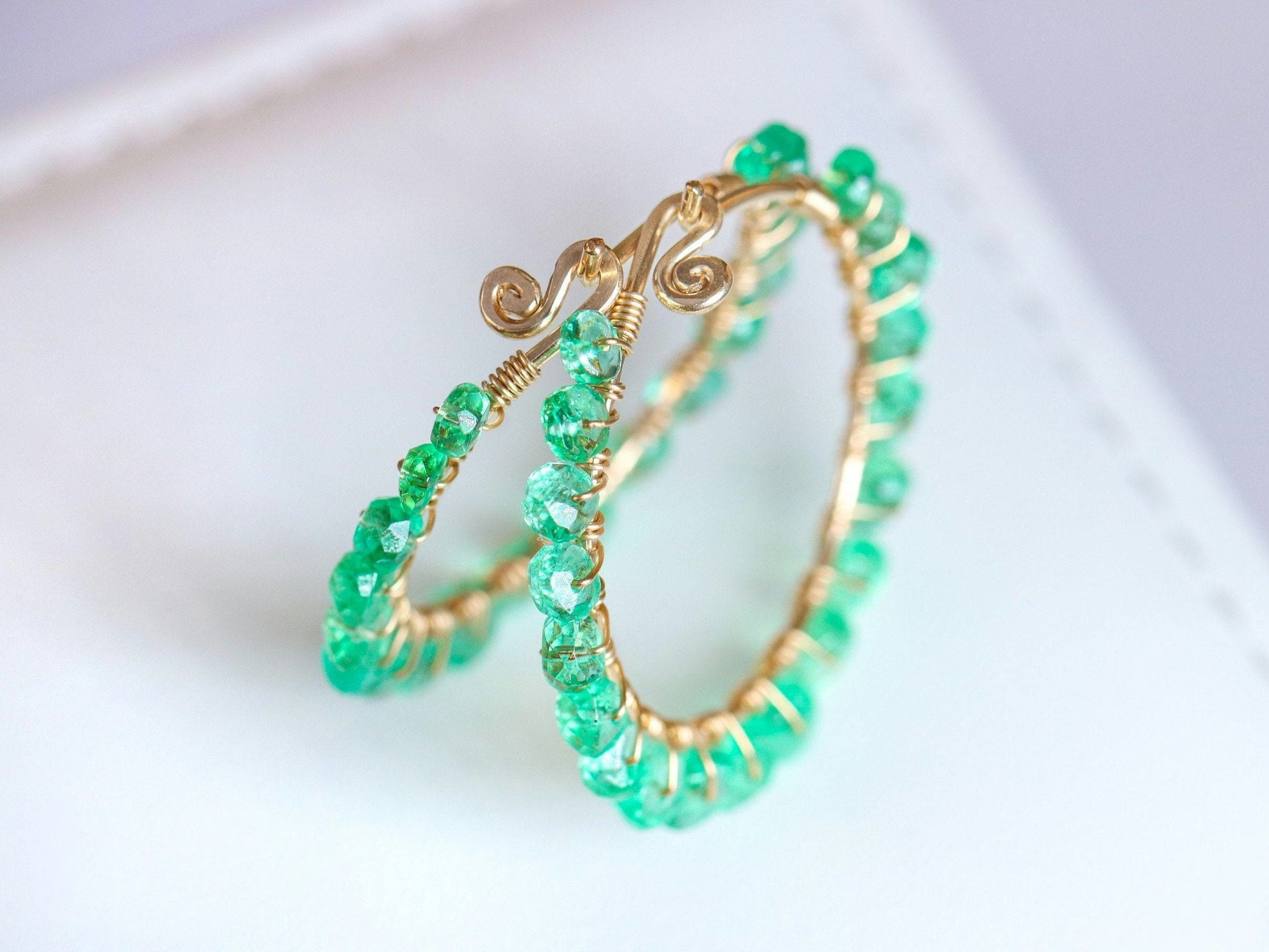
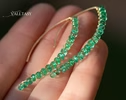
“Valerya’s Emerald earrings are gorgeous! The stones are a beautiful color.”
– Carol, on the Emerald Gleam Earrings
What I Accept in My Designs (and What I Don’t)
Transparency about my sourcing standards is important to me, so here’s exactly where I draw my lines with Emerald treatments:
- I accept: None, Insignificant, and Minor. These levels mean the Emerald has naturally good clarity and needed little to no help. The stone’s beauty is fundamentally its own.
- I sometimes accept: Moderate, but only when the color is extraordinary and the stone is for a specific design where inclusions add character rather than detract.
- I never accept: Significant treatment or dyed Emeralds. If a stone needs heavy oiling to look presentable, the natural clarity isn’t there. And dyed stones are an entirely different category that I don’t work with at all.
“Understanding Emerald treatments isn’t about being suspicious. It’s about appreciating that even a treated Emerald is a natural miracle that formed deep in the Earth over millions of years.”
COMMON QUESTIONS
Emerald Treatment FAQ
Is an oiled Emerald still a real Emerald?
Yes. Oiling is a clarity enhancement, not a change to the stone’s composition. The Emerald is still 100% natural. The oil simply fills tiny surface fractures to let you see the stone’s true color more clearly. This has been standard practice since ancient times.
Can the oil dry out over time?
Natural oils (like cedar oil) can slowly evaporate over many years, especially in dry environments or if the stone is cleaned with harsh chemicals. If this happens, a jeweler can re-oil the stone. This is a routine maintenance procedure, not a sign of a problem.
How should I clean my Emerald jewelry?
Use only a soft, damp cloth with lukewarm water. Never use ultrasonic cleaners, steam cleaners, or chemical jewelry cleaners on Emeralds. These can strip the oil treatment and damage the stone. Gentle care is the key to keeping Emeralds beautiful.
Does treatment affect an Emerald's value?
Yes, treatment level significantly affects value. Untreated Emeralds with good clarity command the highest prices. “Minor” treatment stones are the next tier. As treatment level increases, value decreases relative to similar-looking stones. This is why certificates matter, especially for investment-grade stones.
SEE THE GREEN
Explore Emerald Jewelry
Every Emerald in my collection is hand-selected for color and clarity.
Shop Solid Gold EarringsFIND YOUR NEXT FAVORITE
Solid Gold Earrings
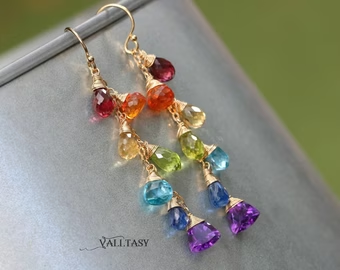
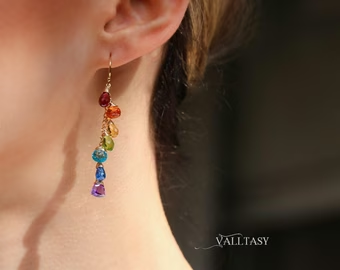
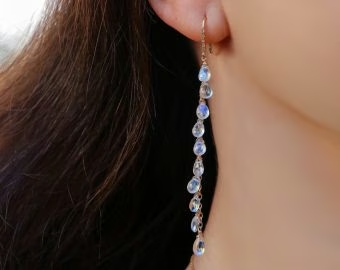
From Emeralds to Sapphires, every pair is handmade with carefully selected gemstones ❤️



KEEP READING
More Gemstone Guides
How Custom Gemstone Jewelry Orders Work at Valltasy
Ever wanted a piece made just for you? Custom gemstone jewelry is simpler than it [...]
30
Aug
Aug
Karat vs Carat: The Two Words Everyone Mixes Up
Karat or carat? They sound identical but measure two different things: one is the purity [...]
28
Jul
Jul


