
No items in the cart
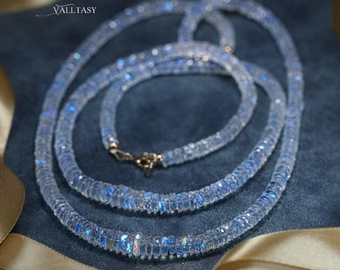






Labradorite: Why I Fell in Love With This Stone (and You Will Too)
Labradorite looked like an ordinary grey stone until I tilted it and that incredible blue flash appeared. Here's what creates that magical effect, how Labradorite compares to Moonstone, and what I look for when selecting stones for my jewelry designs.
By Valerya | 6 min read
KEY TAKEAWAYS
- Labradorescence is the magical flash of color inside Labradorite, caused by light reflecting off internal layers in the stone
- Quality Labradorite shows strong, full-face flash in multiple colors: blue, gold, green, and sometimes orange or purple
- Labradorite and Moonstone are related stones (both feldspars) but create very different visual effects
- Look for stones where the flash is visible from multiple angles, not just one narrow position
How I Fell in Love With Labradorite
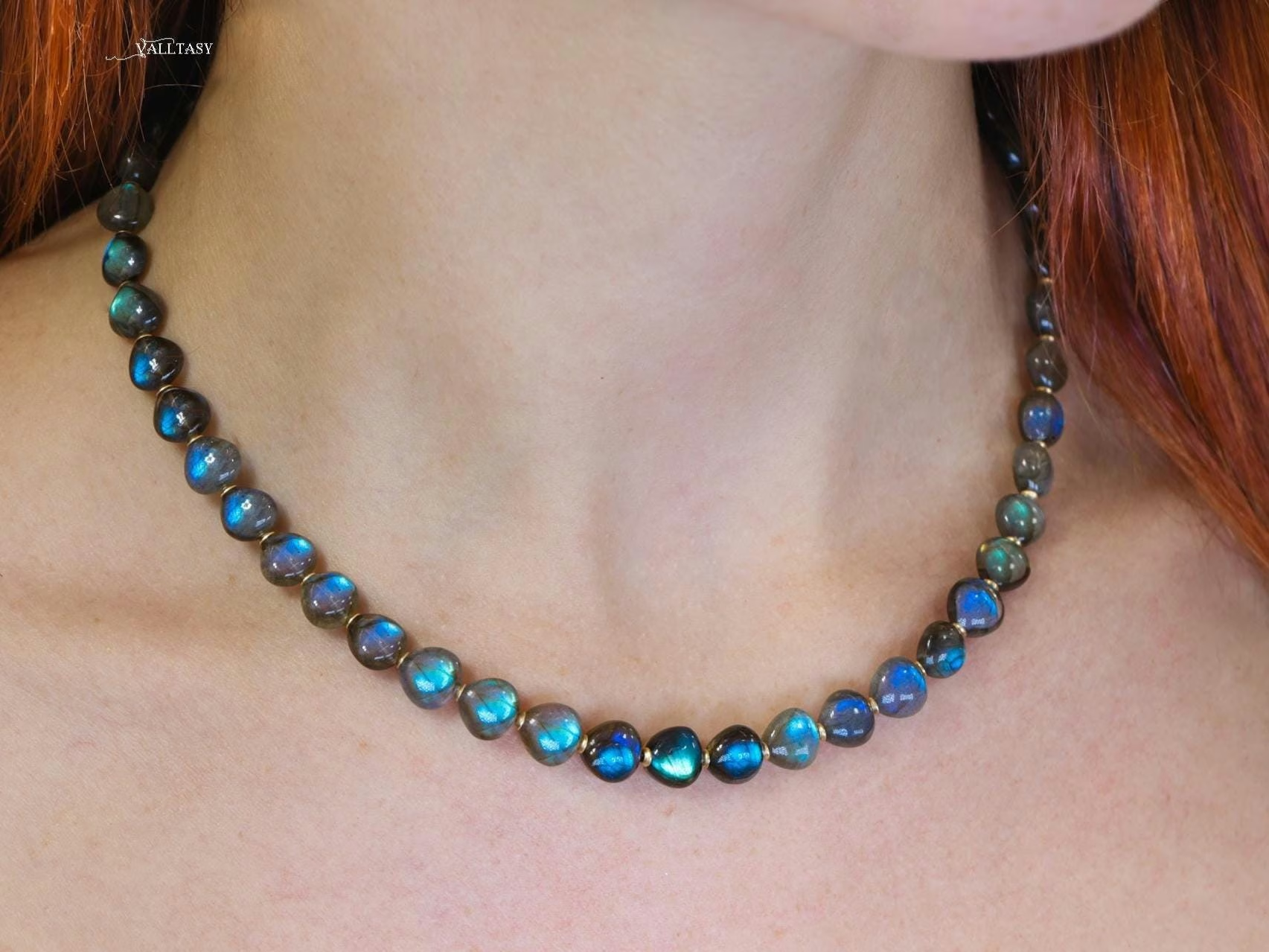
I remember the first time I held a piece of Labradorite in my hands. It looked like an ordinary grey stone. Then I tilted it slightly, and this incredible blue flash lit up from inside. It was like the stone was hiding a secret, and it had just decided to show me.
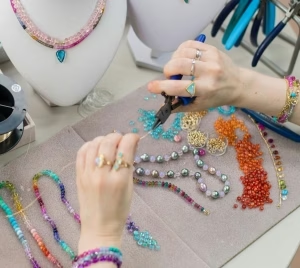
That moment changed the direction of my work. I started sourcing Labradorite from all over, looking for stones with the strongest, most dramatic flash. Some showed deep midnight blue, others had golden amber or peacock green. Each one was unique, and each one felt like a tiny piece of magic.
Today, creating Labradorite jewelry is one of the things I’m most excited about. I’ve designed entire collections around it because I genuinely believe it’s one of the most underappreciated stones in the jewelry world. If you haven’t experienced it in person, you’re in for a surprise.
What Creates That Magical Flash
The effect that makes Labradorite so special has a name: labradorescence. It’s not a surface coating or a trick of light on the polish. It happens deep inside the stone, where microscopic layers of different minerals are stacked on top of each other like pages in a book.
When light enters the stone and hits these layers, it bounces back and forth between them. Different layer thicknesses produce different colors, which is why one stone might flash blue while another shows gold or green. The thinner the layers, the bluer the flash. Thicker layers create warmer colors like orange and amber.
As a designer, what excites me most is how different cuts reveal different flash patterns. I specifically look for stones that have been cut to maximize the flash, so the color is always facing you when the piece is worn. That’s why the cut of a Labradorite matters just as much as the quality of the flash itself. For more on how gemstone colors affect us, I have a whole post on color psychology.
💬 WHAT CUSTOMERS SAY
“The Labradorite necklace, bracelet and earrings are breathtaking! Quite possibly my favorite pieces. The quality of the stones you choose is remarkable and honestly, I was speechless when I opened the package.”
– Karen, on the Twilight Queen Labradorite Necklace

Labradorite vs. Moonstone: How They Compare
I work with both Labradorite and Moonstone in my studio, and customers often ask me how they’re different. They’re actually related: both are feldspar minerals, and both create their optical effects through internal light play. But the result is quite different.
Labradorite
- Dark grey to black base with vivid colored flashes
- Bold, dramatic, high-contrast effect
- Flash appears in defined areas and changes with angle
- Colors: blue, gold, green, orange, purple, sometimes all at once
- Feels bold and mysterious
Moonstone
- Translucent milky white base with soft blue or rainbow glow
- Gentle, ethereal, dreamy effect
- Glow floats across the surface as the stone moves
- Colors: blue, rainbow, peach (depending on variety)
- Feels soft and romantic
MY TAKE
I don’t think of them as competitors at all. Labradorite is the stone you reach for when you want to make a statement. Moonstone is the one you wear when you want to feel like you’re carrying a piece of the night sky. Most of my customers end up loving both.
“When I hold a Labradorite up to the light and that blue flash appears, it still gives me goosebumps. Every single time.”
What to Look for in Quality Labradorite Jewelry
Not all Labradorite is created equal. Here’s what I look for when I’m selecting stones for my pieces:
- Full-face flash. The best Labradorite shows its flash across most of the stone’s surface, not just a tiny corner. When I source stones, I reject any that only flash in a small area.
- Strong color saturation. A faint, washed-out flash won’t have the same impact as a vivid, electric blue or a rich golden amber. The flash should stop you in your tracks.
- Multiple colors. Spectrolite (the Finnish variety) can show the full rainbow. While most Labradorite shows 1 to 2 colors, the best pieces display 3 or more.
- Good cut orientation. This is crucial. The cutter needs to orient the stone so the flash faces forward when it’s set in jewelry. A poorly oriented cut means the flash disappears when worn.
- Clean surface. Some surface crazing or internal fractures are normal in Labradorite, but the best stones have smooth, clean faces that let the flash shine through without interference.
COMMON QUESTIONS
Labradorite Jewelry FAQ
Is Labradorite durable enough for everyday jewelry?
Labradorite has a hardness of 6 to 6.5 on the Mohs scale, which makes it suitable for necklaces, earrings, and bracelets worn daily. For rings, I recommend a protective bezel setting since rings take more impact than other jewelry types. With normal care, Labradorite jewelry lasts beautifully for years.
How should I care for my Labradorite jewelry?
Clean it gently with a soft, damp cloth. Avoid ultrasonic cleaners, steam, and harsh chemicals. Store it separately from harder stones (like Sapphire or Diamond) that could scratch the surface. Labradorite doesn’t like sudden temperature changes, so remove it before hot tubs or saunas.
What's the difference between Labradorite and spectrolite?
Spectrolite is a rare variety of Labradorite found only in Finland. It shows the full spectrum of colors (hence the name) with exceptionally vivid flash. Standard Labradorite typically shows 1 to 3 colors. Spectrolite is more expensive because of its rarity and the intensity of its color play.
Can I get a custom Labradorite piece made?
Yes! I hand-select every Labradorite stone I work with, and I love creating custom pieces. Visit my custom orders page to tell me what you have in mind, and I’ll find the perfect stone for your design.
SEE THE FLASH FOR YOURSELF
Browse the Labradorite Collection
Every stone hand-selected for maximum flash and color.
Shop LabradoriteFIND YOUR NEXT FAVORITE
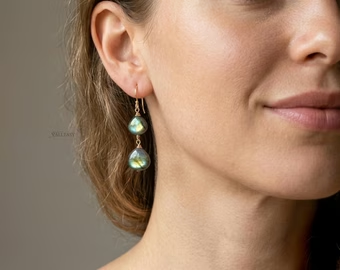
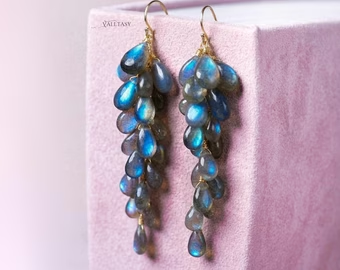
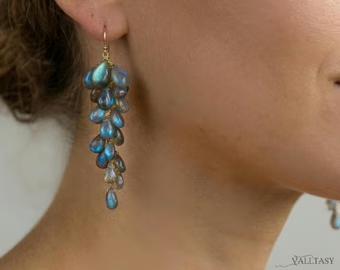
Labradorite Collection
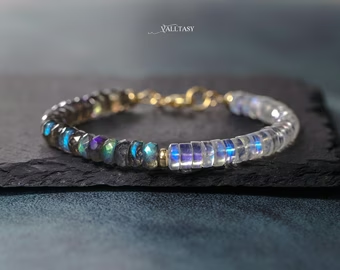
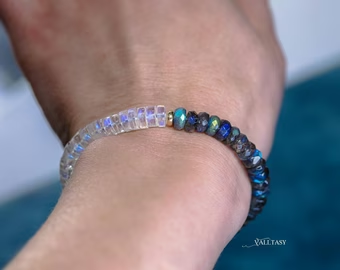
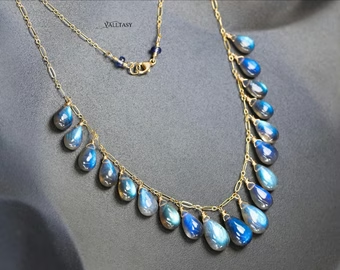
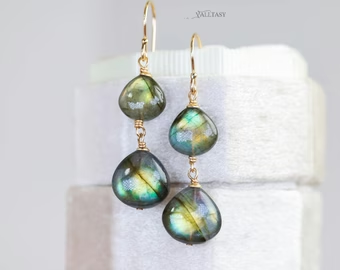
Each piece features hand-selected Labradorite with vivid flash you have to see to believe ❤️
Sold out



KEEP READING
More Gemstone Guides
Can Water Ruin an Opal? What I Tell Every Customer
The most common question I get about Ethiopian Opal: can it get wet? Here's the [...]
01
Oct
Oct
Why Natural Gemstones Have Inclusions (and Why I Love Them)
Nervous about a little mark inside your gemstone? Don't be. Inclusions are tiny natural features [...]
24
Sep
Sep


