
No items in the cart







Can Water Ruin an Opal? What I Tell Every Customer
The most common question I get about Ethiopian Opal: can it get wet? Here's the honest answer from a designer who handles these stones daily. What the hydrophane property actually means, what I've seen happen in water, and why I still make Opal bracelets for everyday wear.
By Valerya | 7 min read
KEY TAKEAWAYS
- Ethiopian Opals are hydrophane, meaning they can absorb water, and you should avoid letting that happen
- If your Opal does get wet accidentally, don’t panic. Pat it dry immediately and let it air dry. It will return to normal, but it’s not something you want to make a habit of
- Remove your Opal jewelry before washing hands, showering, swimming, or any water activity
- With proper care (keeping it dry), your Opal will maintain its fire and beauty for a lifetime
The Question I Get Asked Most About Opal
“Can my Opal get wet?” I hear this question at least once a week. Sometimes several times a day. And I completely understand the concern. There’s a lot of confusing (and pretty scary) information online about Opal water damage, and most of it is either incomplete or wrong.
So let me give you the straight answer from someone who has worked with Ethiopian Opals for years, handles them daily, and has seen exactly what happens when they encounter water: you should always try to keep your Opals dry. If it happens accidentally, it’s not a disaster, but it’s not something to be casual about either.
That said, there is a real property of Ethiopian Opals that you should understand, because it affects how you care for your jewelry. Let me explain what’s actually happening inside the stone when it gets wet. For more general guidance, see my post on showering with jewelry.
What the Hydrophane Property Actually Means
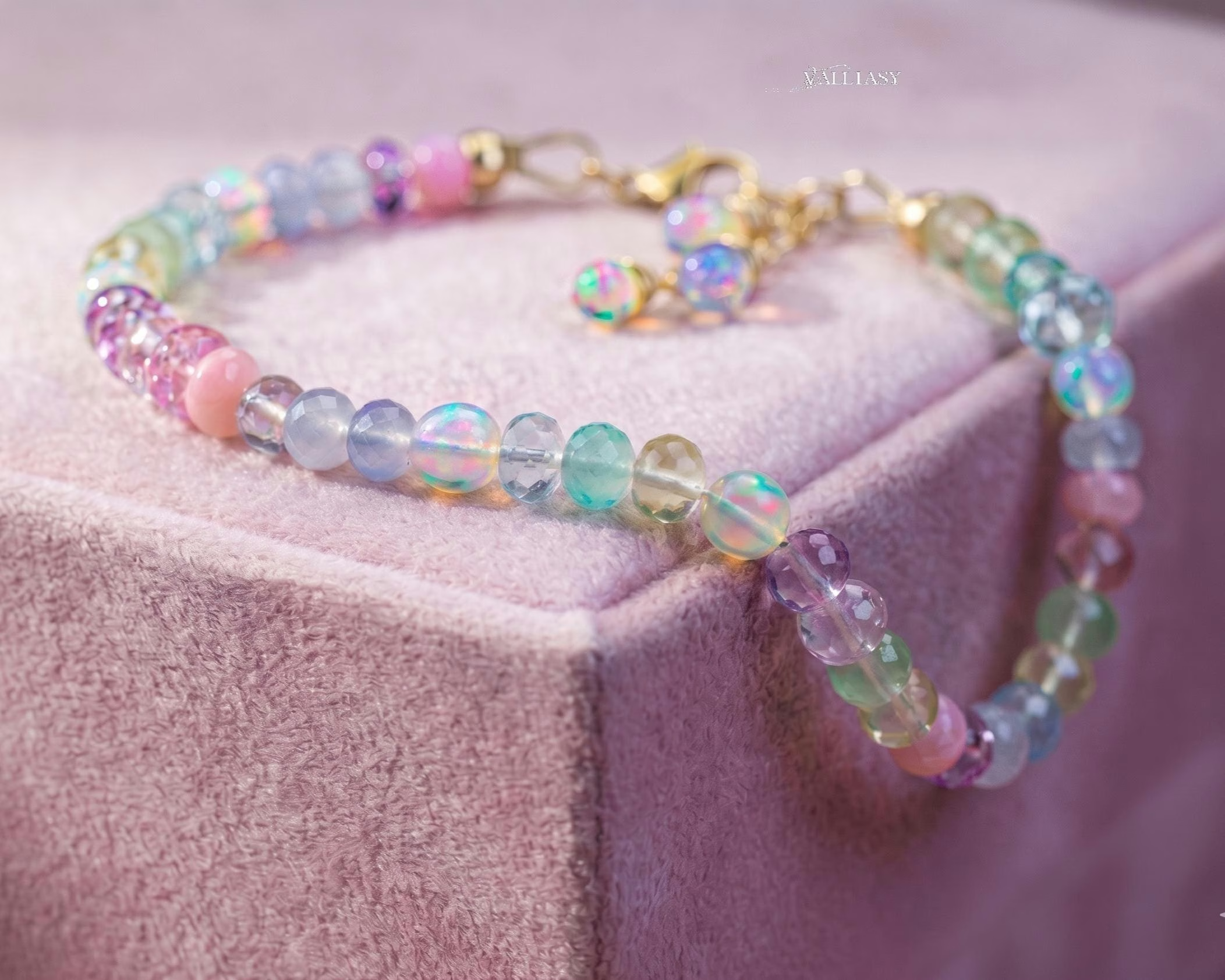
Ethiopian Opals (also called Welo Opals) have a property called hydrophane. In simple terms, the stone has microscopic pores in its structure that can absorb and release small amounts of water. Think of it like a very fine natural sponge, but on a level you can’t see with your eyes.
When an Ethiopian Opal absorbs water, two things can happen:
- It may become more transparent. The water fills those tiny pores and temporarily changes how light passes through the stone. Your Opal might look clearer or more see-through than usual.
- The play of color might change or temporarily diminish. Some Opals show less fire when fully saturated with water, while others actually show more. Every stone is slightly different.
Here’s the important part: both of these changes are temporary. As the Opal dries naturally (usually within hours to a couple of days depending on how saturated it got), it returns to its original appearance. The stone is not damaged. The color play comes back. It’s the same Opal it was before.
💬 WHAT CUSTOMERS SAY
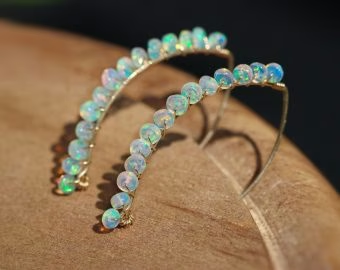
“Beautiful Opal earrings with Opals full of color! They’re short which is a nice bonus as I can wear them a lot plus they look very pretty with any of my outfits! I’m so glad I got them!”
– Angie M., on the Potion Earrings

What Actually Happens When Opals Get Wet
In my years of working with Ethiopian Opals, here’s what I’ve observed when water contact happens accidentally:
- A quick accidental splash: Usually no visible change if you dry it right away. But I still recommend removing your Opal before washing hands. Why risk it?
- Rain exposure: If you get caught in the rain, dry your Opal piece as soon as you get indoors. A few minutes of rain won’t cause permanent damage, but it’s not ideal.
- Forgetting to remove it for 10-15 minutes in water: The stone may become more transparent and the fire can temporarily fade. Don’t panic. It will recover as it dries over several hours. But this is exactly the kind of situation you want to avoid.
- Extended soaking (swimming, bath): This can stress the stone significantly. The Opal may take a day or two to fully dry and return to normal. Repeated soaking over time can eventually cause permanent damage to the stone’s structure.
My rule is simple: treat your Opal as if it doesn’t like water. Make it a habit to take it off before you wash your hands, shower, clean, or swim. If it gets wet once by accident, that’s okay. Just dry it immediately. But don’t let it become a regular thing.
“I’ve watched Opals absorb water and release it hundreds of times. Every single time, the stone comes back to its original beauty. It’s actually one of the things I find most fascinating about this gem.”
How to Enjoy Opal Jewelry Every Day (Without Worrying)
Some people might wonder: if Opals are sensitive to water, can you even wear them daily? Yes. You just need to build a simple habit.
I’ve had customers wear my Opal bracelets and earrings daily for years. The ones who keep them looking perfect all follow the same routine: take them off before water, put them back on after. It takes five seconds and it makes all the difference.
Here’s what I recommend:
- Remove before: washing hands, showering, swimming, cleaning, cooking, applying lotions or perfume
- Keep a small dish by your sink and nightstand for easy on/off
- If it gets wet accidentally: pat dry immediately with a soft cloth, then let it air dry at room temperature (not in sunlight or near heat)
- Store separately in a soft pouch, away from direct sunlight and extreme dryness
Hydrophane sensitivity is simply something to know about your Opal, not something to worry over. With this simple routine, your Opals will stay fiery and beautiful for years to come.
COMMON QUESTIONS
Opal and Water FAQ
Can I wash my hands while wearing my Opal bracelet?
Quick, incidental hand washing usually will not cause any lasting change since the exposure is so brief. That said, my recommended habit is to take your Opal off first. It only takes a second, and it means you never have to think about it. If you do wash your hands with it on by accident, just pat it dry afterward.
My Opal turned clear after getting wet. Is it ruined?
No, it’s not ruined. This is the hydrophane property at work. The Opal absorbed some water and temporarily became more transparent. Let it air dry in a room-temperature environment (not in direct sunlight or near a heater) and it will return to its original appearance, usually within a few hours to a day or two.
Can I wear Opal earrings in the shower?
I’d recommend removing them first. A quick splash is fine, but the sustained warm water of a shower is more exposure than I’d suggest as a regular habit. It only takes a second to slip them off, and it will help your Opals maintain their best appearance over time.
Does this apply to Australian opals too?
Australian Opals are generally not hydrophane, so they don’t absorb water the same way Ethiopian Opals do. However, it’s still best practice to avoid prolonged soaking for any Opal, as extreme temperature changes and chemicals can affect any gemstone.
How should I store my Opal jewelry?
Store it in a soft pouch in a room with normal humidity, away from direct sunlight and heat sources. Opals prefer a stable environment. Don’t store them in airtight containers or next to silica gel packets, which can dry the air too much.
SEE THE FIRE FOR YOURSELF
Browse the Ethiopian Opal Collection
Every piece features hand-selected Welo Opals with vivid color play.
Shop Ethiopian OpalFIND YOUR NEXT FAVORITE
Ethiopian Opal Collection
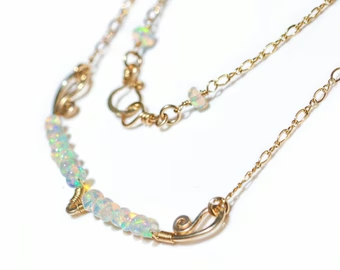
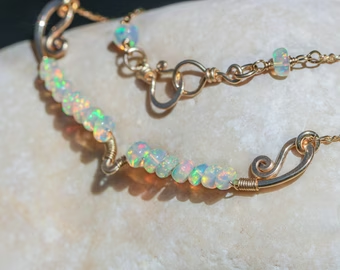
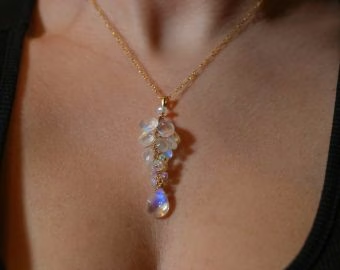
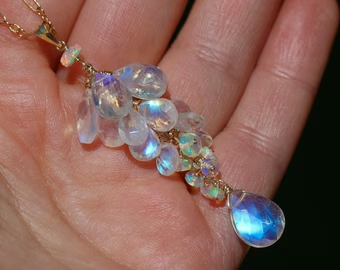
Every Opal in this collection was hand-selected for maximum fire and color play ❤️



KEEP READING
More Opal Guides
Can Water Ruin an Opal? What I Tell Every Customer
The most common question I get about Ethiopian Opal: can it get wet? Here's the [...]
01
Oct
Oct
Why Natural Gemstones Have Inclusions (and Why I Love Them)
Nervous about a little mark inside your gemstone? Don't be. Inclusions are tiny natural features [...]
24
Sep
Sep


