
No items in the cart






Why Natural Gemstones Have Inclusions (and Why I Love Them)
Nervous about a little mark inside your gemstone? Don't be. Inclusions are tiny natural features that are often a sign a stone is real, and in gems like Emerald they are part of the beauty. Here is what inclusions are, why they are often a good sign, and when they actually matter.
By Valerya | 6 min read
KEY TAKEAWAYS
- Inclusions are tiny natural features inside a gemstone, formed while the stone grew deep in the earth
- They are usually a good sign, often a hint that a stone is natural rather than glass or an undisclosed imitation
- In some stones, like Emerald, a few inclusions are completely expected and part of the character
- Inclusions mostly matter for durability when a large one reaches the surface, which I watch for when I select stones
What Gemstone Inclusions Actually Are
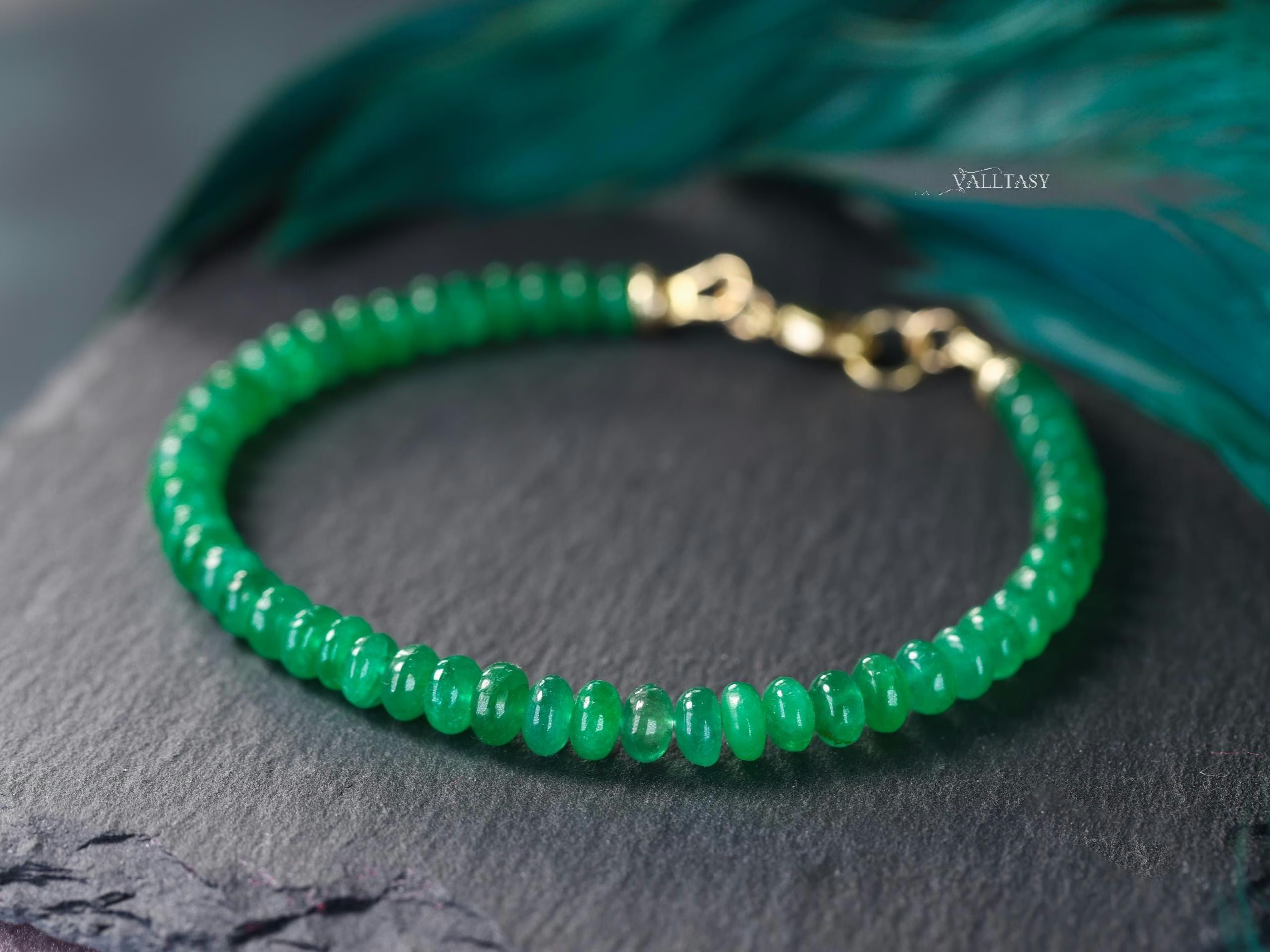
When a customer asks me nervously about a little mark inside a stone, I always smile, because that mark is usually a small miracle. Gemstone inclusions are tiny features trapped inside a stone while it was forming, sometimes over millions of years. They can be a wisp, a fleck of another mineral, or a delicate feather-like pattern.
In Emerald, these features are so normal that the trade has a lovely name for them: jardin, the French word for garden, because the wisps can look like tiny foliage inside the stone. The GIA notes that a clean Emerald is actually the exception, not the rule.
Why They Are Usually a Good Sign
Here is the part that surprises people most. A few inclusions can be a good clue that a stone is real, though they are never proof on their own. Nature is rarely perfect, so a genuine gemstone usually carries little signs of its own history. A stone that is completely flawless and suspiciously cheap is far more likely to be glass or an imitation than a natural treasure.
I think of inclusions as a fingerprint. No two stones share the same ones, which means your piece is truly one of a kind. If you want to go deeper on the natural versus not-natural question, my post on natural gemstones versus dyed is a good next read.
WHAT CUSTOMERS SAY
“A special treat for myself … what a gorgeous selection of gems! The color is so juicy that I cannot stop looking at my wrist! Thank you for such high quality natural gems!”
– Mary Ann W., on the MINI Bracelets

When an Inclusion Actually Matters
Now for honesty, because not every inclusion is harmless. The kind I watch for is a large fracture that reaches the surface of the stone. That can create a weak spot where a hard knock might cause a chip, especially in a ring that takes a lot of bumps.
Tiny internal wisps that sit safely inside the stone are a different story, and they are almost never a problem. Those same surface-reaching lines are also where a little oil comes in. Almost every Emerald you will find is oiled, a very old and accepted practice that fills those fine lines to improve clarity. It changes how the stone looks, not how strong it is, which is why I never let my Emerald pieces near an ultrasonic cleaner, since it can drive that oil right back out. I wrote more about this in my post on what cedar oil on an Emerald certificate means.
“Most inclusions are not flaws to me. They are little records of how a stone grew, no two maps ever quite the same.”
How I Balance Inclusions
When I sort stones, I’m looking for a happy balance. I want a gem that is clean enough to be bright and lovely to the eye, what jewelers call eye-clean, while still carrying the little natural character that makes me think it is the real thing. Only a gem lab report can say for certain.
For everyday pieces I lean toward stones with no large surface-reaching fractures, so they stay strong for years of wear. For a statement Emerald, I happily accept a bit of jardin, because that garden inside is part of why the stone is so alive. It’s always a conversation between beauty and strength.
Inclusions in Other Gemstones I Work With
Emerald is not the only stone with its own signature inclusions. Sapphire sometimes carries fine, silk-like needles of rutile inside it, which is part of what gives some Sapphires that soft inner glow, and occasionally a visible star. Tourmaline can carry its own delicate internal needles and fractures too, a little less famous than Emerald’s jardin but just as natural.
I look at every stone this way, not only Emerald. A little internal character often helps tell a gem apart from a piece of colored glass, though it is only ever a clue, never proof on its own.
COMMON QUESTIONS
Inclusions FAQ
Are inclusions a defect?
Generally no. Most inclusions are simply natural features that formed as the stone grew. They can be a helpful clue that a gem is genuine, though never proof on their own, and in stones like Emerald they are completely expected. Mainly large surface-reaching fractures are worth a closer look.
Should I only buy flawless gemstones?
You don’t need to. A stone can be eye-clean, meaning no inclusions are visible without magnification, while still having tiny natural marks inside. Chasing total perfection often means paying much more, or ending up with glass or an undisclosed imitation.
Do inclusions make a stone weaker?
Mainly when a significant fracture reaches the surface. Small internal inclusions rarely affect strength at all, though on rare occasions a very large internal fracture can matter too. That is exactly what I check for when I choose stones, especially for rings, which take the most knocks.
How can I tell a real stone from glass?
A jeweler’s loupe helps. Natural stones usually show tiny inclusions, while glass and many imitations look too perfect or contain round gas bubbles. A lab-created stone is a different case altogether: it shares the same chemistry as a natural gem and is real gemstone material, not an imitation, though it can also show its own kind of inclusions. If a colored gem is flawless and very cheap, treat that as a reason to ask more questions, and remember that a report from a gemological lab like GIA is the only real way to know for certain what you are holding.
Will inclusions show up on a lab report?
Not usually as a diagram. A gemological lab report mainly identifies the stone and discloses any treatments, and for colored stones it does not typically plot inclusions the way a Diamond grading report does. Your stone’s own inclusions stay unique to it either way, one more reason I think of them as a fingerprint rather than a flaw.
REAL STONES, REAL CHARACTER
Browse My Natural Gemstone Jewelry
Every stone hand-selected, natural, and one of a kind.
Shop JewelryGARDENS INSIDE THE STONE
Natural Emerald Pieces
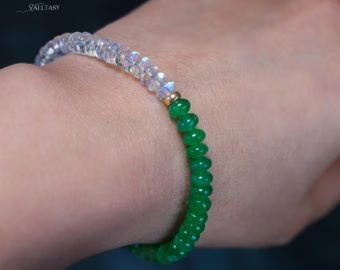
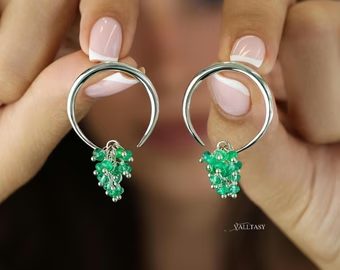
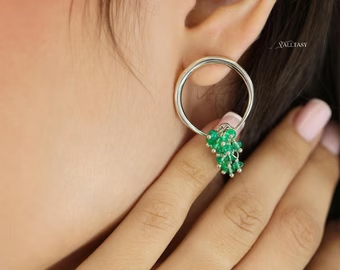
Genuine Emeralds, jardin and all, each one truly one of a kind ❤️


KEEP READING
More Gemstone Guides
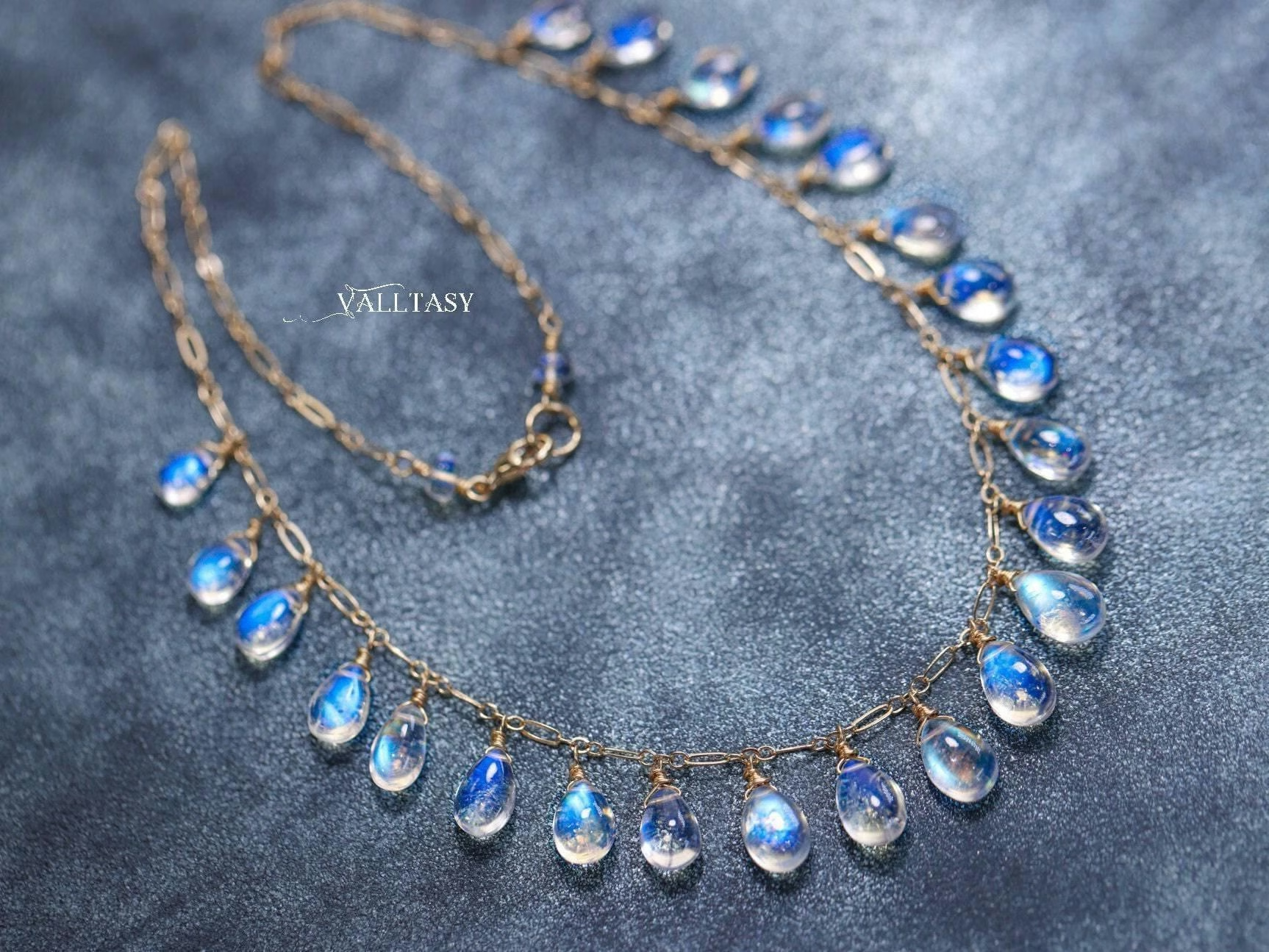
Moonstone Meaning: Symbolism, Benefits & How to Wear It
Moonstone has long been known as the stone of new beginnings, but that barely scratches [...]
14
Jul
Jul
Amethyst Color: Shades of Purple, Pink, and Beyond
Amethyst ranges from pale lilac to deep royal purple, and even rare pink and bicolor [...]
27
Aug
Aug


